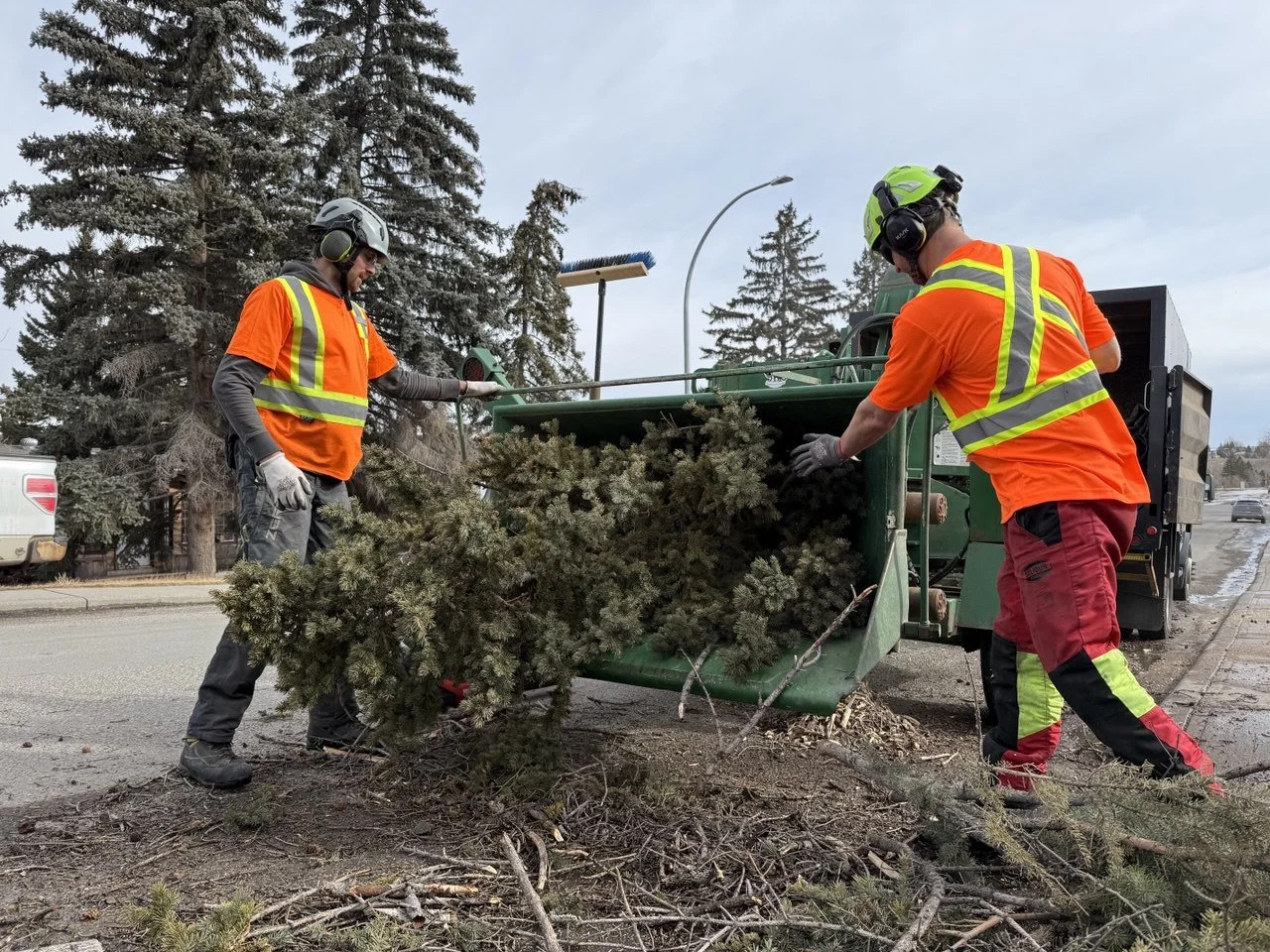
Tree Removal in Calgary

Safe, professional removal for hazardous, dead, and problem trees


Trees are a valuable part of Calgary’s urban landscape, but in our boreal climate they also face extreme stress — wind, heavy snow, freeze–thaw cycles, pests, and age-related decay. When a tree becomes unsafe, diseased, or incompatible with its surroundings, professional removal is often the safest and most responsible solution.

In this article, you will learn:

  • Urban tree species & removal challenges

  • Climate, safety, and risk factors

  • Rules, permits, and legal restrictions

  • When and why trees need removal

  • What affects cost and the removal process

Common Urban Tree Species & Removal Challenges

Urban forests in Calgary and similar boreal-transition cities (e.g. Regina or Prince George) feature a mix of deciduous and coniferous species adapted to harsh climates. The most common trees include fast-growing poplars/aspen, various spruces, American elms, green ash, birches, and Manitoba maples. Each has unique traits that affect removal strategies:

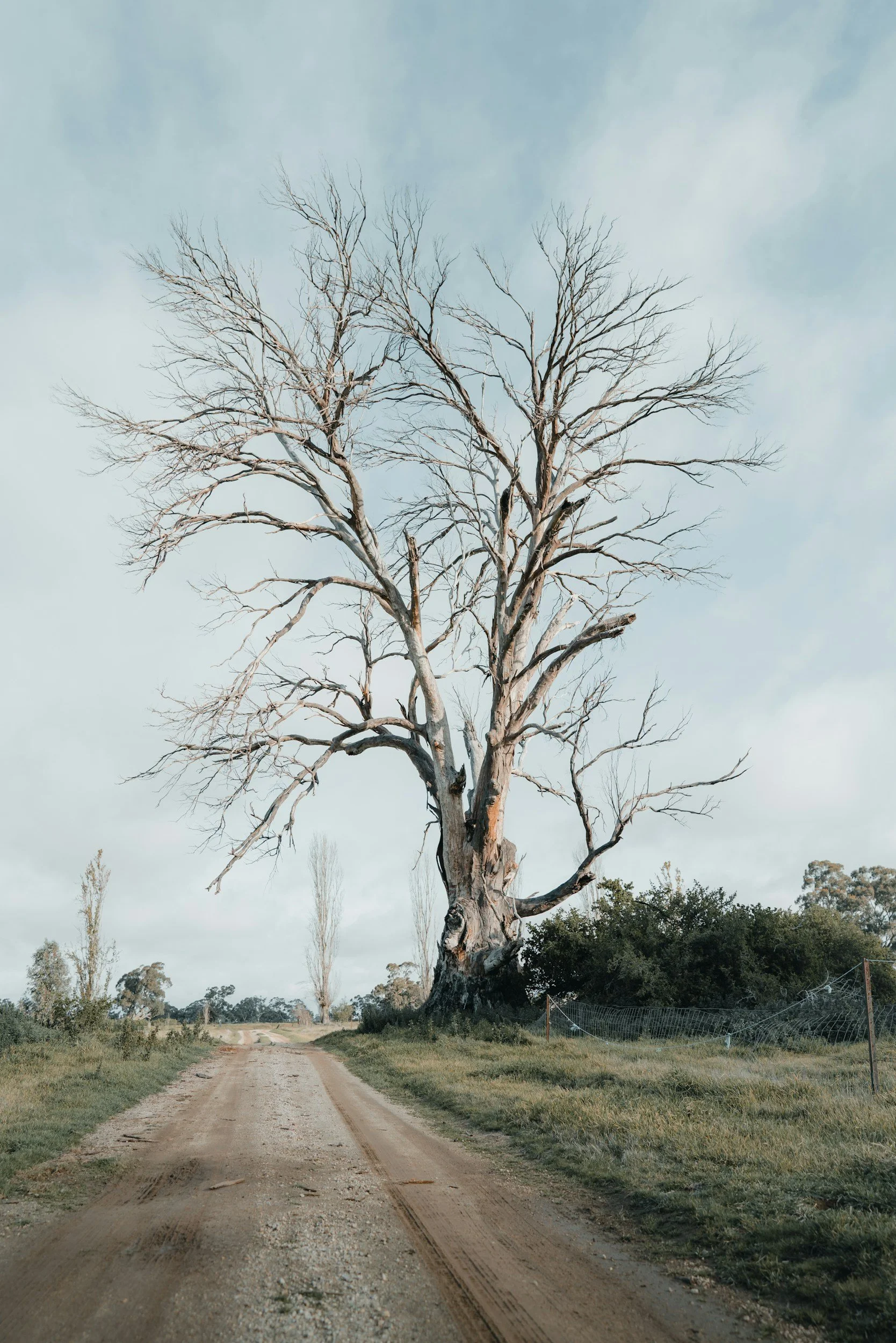
  • Poplars (Aspen, Cottonwood & Hybrid Poplars): These are ubiquitous shade trees but tend to be short-lived. As poplars age, they often develop internal decay (heart rot) leading to hollow trunks. Their wood is relatively weak – large poplars frequently shed heavy branches during wind storms. Extensive surface root systems can also interfere with sidewalks or lawns. Old, rotting poplars are a common removal target for safety reasons.

  • Spruce (White, Colorado Blue Spruce): Spruce trees are hardy evergreens widely planted in prairie cities. They have shallow roots and dense canopies, which can pose hazards in extreme weather. Shallow rooting means spruces can uproot in high winds or saturated soil. Heavy snow loading may break limbs, especially if the tree’s health is compromised by pests (e.g. spruce budworm defoliation). Spruce generally don’t require much pruning, so removals are usually due to size, storm damage, or decline. In older neighborhoods, overgrown spruces near houses often require careful sectional removal.

  • American Elm: Elms form beautiful arching canopies (historic boulevards in Regina and Calgary are lined with elm). However, all elms are susceptible to Dutch Elm Disease (DED), a fatal fungus spread by bark beetles. If an elm becomes infected (wilting, yellowing leaves and brown streaks under bark), it will likely die and must be removed promptly to prevent spreading DED. Municipalities have strict DED management – infected elms are condemned and removed by certified arborists. Healthy elms can live for decades, but large size and numerous long limbs make removals complex, often involving aerial lifts or rigging.

  • Green Ash: Ash trees (such as Manitoba or green ash) are common boulevard and yard trees, valued for their hardiness. Unfortunately, invasive pests like the Emerald Ash Borer (EAB) are an emerging threat in western Canada. A borer-infested ash will exhibit dieback and woodpecker holes; once extensively infested, removal is often necessary. Ash can also suffer from fungal diseases or a psyllid insect in some cities, causing branch dieback. Arborists monitor ash for these issues and may recommend removal of severely affected trees to ensure safety.

  • Birch: Weeping birch and paper birch are popular ornamentals in these regions but can be high-maintenance. They have relatively short lifespans in urban conditions and often struggle with drought stress. Birch trees are prone to insect attacks (like bronze birch borer) and fungal infections, which cause progressive dieback. Once a birch has lost large portions of its crown or has extensive borer galleries, removal may be the safest option to prevent hazard.

  • Manitoba Maple (Boxelder): This fast-growing native maple often pops up in yards. While hardy, Manitoba maples have brittle wood and often develop weak branch unions. They are notorious for limb breakage – large scaffold branches can crack or split off, especially in older trees. They also can get stem cankers that kill sections of the tree. Because of these structural issues, mature Manitoba maples are frequently removed if they threaten structures or power lines.

  • Pines and Others: Urban plantings may include Scots pine, lodgepole pine, or even ornamental firs. In northern cities like Prince George, native lodgepole pines are common (and at risk from mountain pine beetle infestations). A pine killed by beetles or drought becomes a standing fire and fall hazard, often requiring removal. Willows and poplars along river valleys, as well as ornamental flowering trees (plum/cherry), can also require removal if they succumb to disease (e.g. black knot fungus on cherries) or storm damage.

In summary, older poplars with decay, diseased elms, pest-infested ash or pine, and any tree with major structural weakness are prime candidates for removal in the urban boreal context.

Climate Factors: Wind, Freeze–Thaw & Snow Hazards

Heavy early snowfalls, like Calgary’s infamous “Snowtember” storm, can break leaf-laden branches and even split tree trunks under the weight. Professional crews often face such storm damage in boreal-zone cities, where rapid weather shifts are common.

Urban trees in Calgary and similar climates endure extreme weather that contributes to decline and failure:

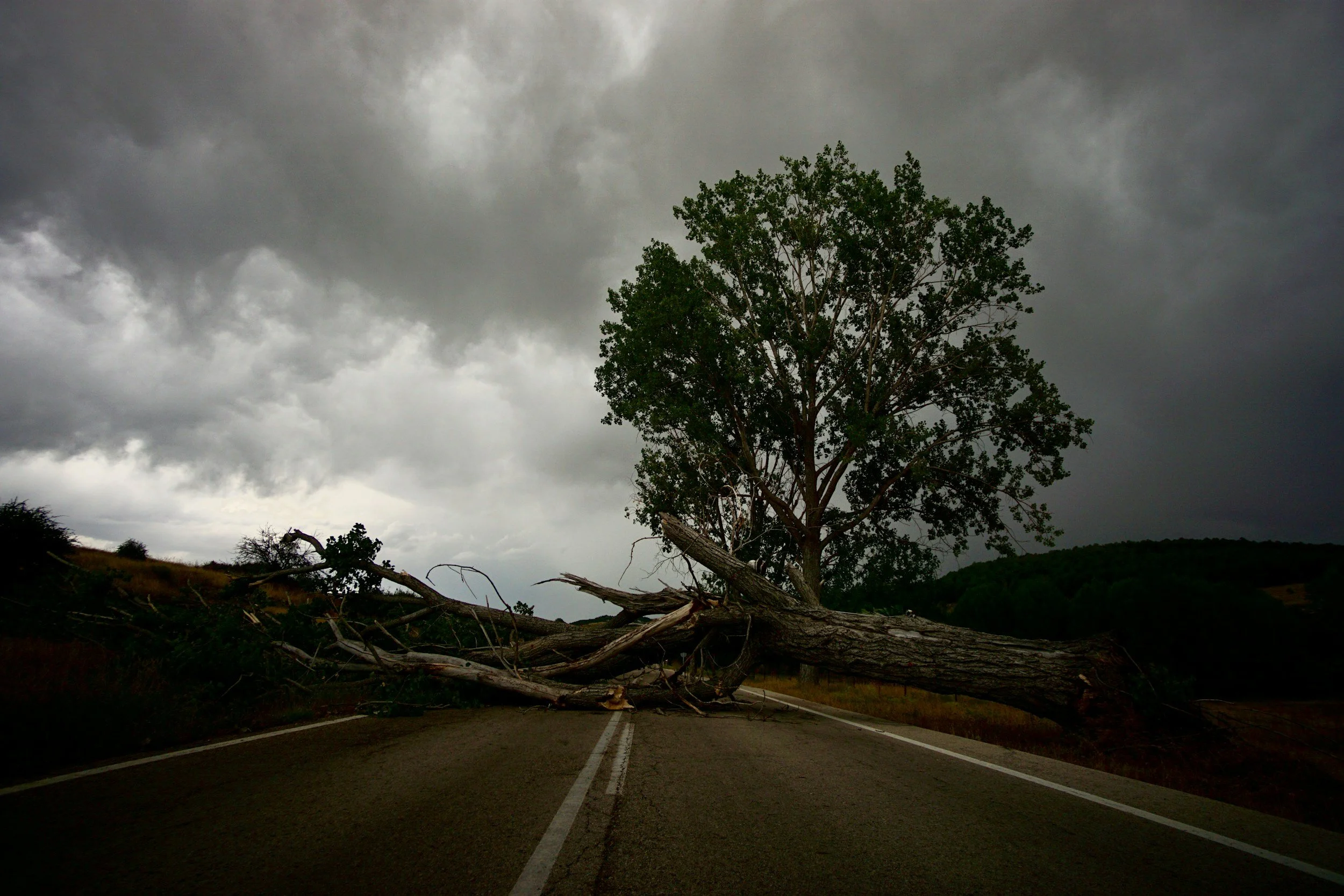
  • High Winds and Storms: Chinook winds and summer thunderstorms bring sudden high gusts. Storm winds commonly break weak or dead branches and can even uproot shallow-rooted trees. In severe wind events, whole trees may topple onto houses or roads, especially if the root system was compromised (e.g. by decay or recent trenching). Winds can also strip away bark in exposed trees, creating wounds that invite disease. After any windstorm, arborists often perform emergency removals of partially fallen or leaning trees that pose an immediate hazard.

  • Freeze–Thaw Cycles: Rapid temperature swings are a hallmark of the prairie climate. In winter, a sudden Chinook can warm a tree’s bark in the daytime sun, then a quick refreeze at night causes the sap and cells to freeze and rupture. This leads to sun scald or frost cracks – long, split sections of bark on the south/southwest side. Repeated freeze–thaw stress weakens the tree’s structural integrity and can kill limbs or even whole trees not adapted to such swings. Dry cold is another issue: in Calgary’s arid winters, evergreens can desiccate in Chinook winds, and roots can be damaged by frost heaving when warm days are followed by hard freezes. Over years, this climatic stress contributes to branch dieback and makes trees more susceptible to pests and breakage.

  • Heavy Snow and Ice Loads: Wet snow and ice storms put tremendous weight on branches. Early autumn or late spring snowfalls are especially damaging if trees still have leaves – the snow clings to the foliage, causing limb failures across the city (as seen in the September 2014 “Snowtember” event). Evergreens also catch snow; while spruces are adapted to shed moderate snow, an unusually heavy accumulation or freezing rain can overload even sturdy boughs, snapping them. Snow loading often leads to multi-day cleanup operations, removing broken limbs and occasionally entire trees that have split or uprooted. Preventative pruning (to thin crowns and remove weak forks) is recommended to reduce snow and ice damage, but when severe storms hit, removals of irreparably damaged trees are sometimes the only option.

In essence, the local climate’s extremes – powerful windstorms, abrupt freeze–thaw cycles, and heavy snow/ice – all take a toll on urban trees. Homeowners in these regions often find that storm damage or winter stress has turned an once-healthy tree into a potential hazard that needs professional removal for safety.

City Tree Removal Regulations and Permits

Tree removal practices are governed by local regulations that vary between municipalities and provinces. It’s important to know the rules in your area before removing a tree:

  • City of Calgary (Alberta): Calgary has a strict Tree Protection Bylaw for public trees. Any tree on City property (parks, boulevards, natural areas) is protected – it is illegal to cut, remove, or prune a City-owned tree without permission. Homeowners cannot remove City boulevard trees and face hefty fines up to $10,000 for serious violations. However, no permit is required to remove a tree on private property in Calgary – the bylaw does not apply to private trees. This means as a homeowner you are free to remove a tree in your yard at your discretion (assuming it’s not part of a new development permit requirement). The City still encourages consulting an arborist, but there is no formal permit process for privately-owned trees. Public trees, on the other hand, can only be removed by the City or with explicit City approval (often requiring mitigation planting or fees). Always verify property lines: if a trunk straddles City land, it may be considered a public tree.

Seasonal Restrictions: Dutch Elm Disease and Nesting Birds

Tree work in Canada must consider seasonal wildlife and pest restrictions designed to protect our environment:

  • Dutch Elm Disease (Elm Pruning Ban): To prevent the spread of Dutch Elm Disease, Prairie provinces enforce seasonal bans on pruning elm trees. Elm bark beetles, which carry the DED fungus, are active in spring and summer and are attracted to fresh cuts. Thus, it is illegal to prune elm trees during the warm season in affected regions. In Alberta, no elm pruning is allowed from April 1 to September 30. In Saskatchewan, the ban is April 1 to August 31, and in Manitoba April 1 to July 31. (Each province sets dates to cover the beetles’ active period – essentially spring through late summer.) During these months, all elm trimming or removal is prohibited except in emergency situations with special permission. Violating the elm ban can lead to fines. If you have a dead or risky elm that truly must be removed in summer, authorities must typically be notified so the wood can be disposed of safely (burned or buried, since storing elm wood is also illegal). The bottom line: elm removals should be scheduled in the fall or winter whenever possible. This seasonal window (October through March) is the safe time to prune or remove elms without attracting elm beetles.

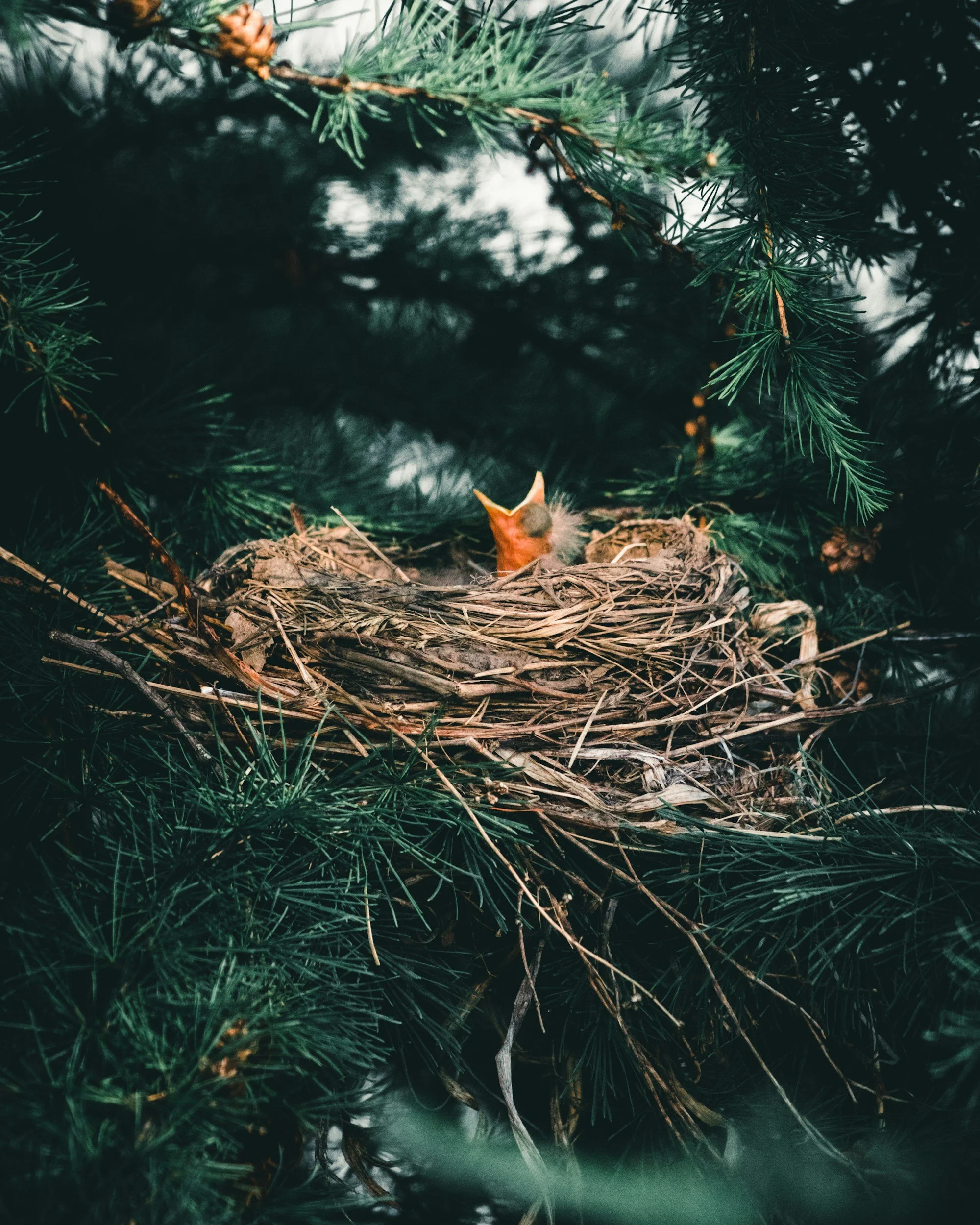
  • Nesting Migratory Birds: Most tree removals are avoided in spring and early summer due to bird nesting season. Under Canada’s Migratory Birds Convention Act, it is against federal law to disturb or destroy the active nest of a migratory bird. This covers most songbirds, waterfowl, and raptors – virtually any birds except a few pest species like magpies or starlings. In practical terms, roughly from mid-April to mid-August is prime nesting period in Western Canada. If a tree contains an occupied nest (eggs or baby birds present), cutting that tree down is illegal and can result in hefty fines or even jail time. Professional arborists take this seriously: prior to removal, an arborist will inspect the tree for nests (often called a “bird sweep”). If an active nest is found, the removal is postponed until the young have fledged and the nesting season is over. In some cases, if a hazardous tree must be removed during nesting season, a permit must be obtained from Environment Canada, and a wildlife biologist may need to relocate the birds (this is rare and only for extreme hazards). Best practice is to schedule non-urgent tree work for fall or winter when nests are empty. Additionally, some species (e.g. eagles, hawks, herons) have year-round nest protection under provincial laws – their nests cannot be removed even in the off-season without special approval. Tree companies will identify such situations and involve the proper authorities. Always inform your arborist if you’ve seen birds nesting in the tree, and be aware of the general nesting window. In summary: to protect wildlife, avoid tree removals from spring through midsummer unless absolutely necessary, and never remove a tree with an active bird nest (it’s both illegal and harmful to Canada’s biodiversity).

By adhering to these seasonal restrictions – the elm pruning ban and nesting season protections – tree services in the region help prevent the spread of a devastating disease and safeguard migratory bird populations. Responsible companies will advise you on timing tree work appropriately to remain in compliance with these environmental regulations.

Safety Best Practices for Urban Tree Removal

Removing a large urban tree is dangerous work that requires rigorous safety measures. Professional arborists in Calgary and similar urban settings follow industry best practices to protect people and property:

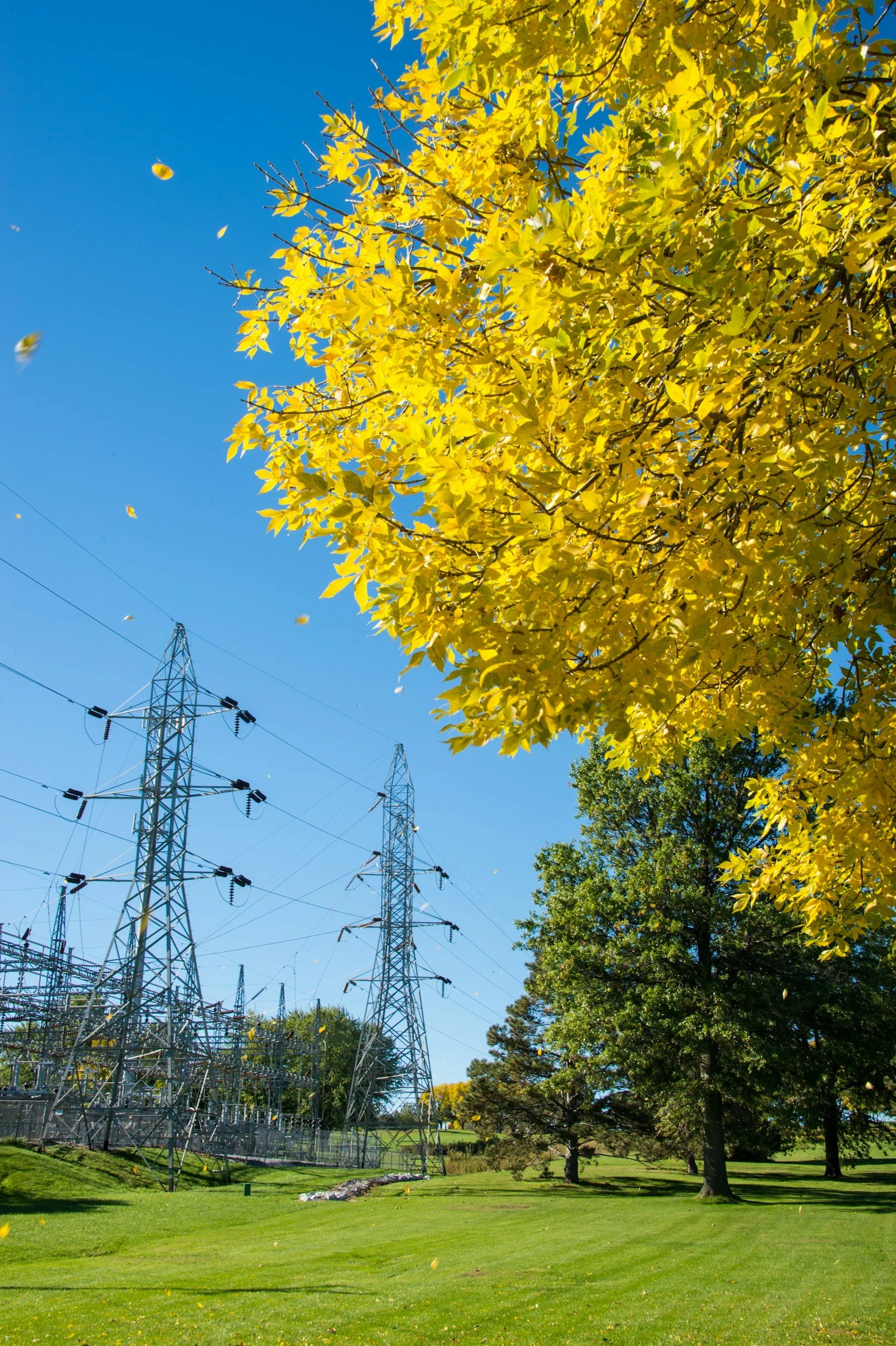
  • Power Line Precautions: Trees near overhead power lines present a serious hazard. Electricity can arc several feet from a line to a tree or equipment, so only certified utility-line arborists should work within 10 feet of live lines. In fact, provincial safety codes and utility companies typically prohibit unqualified persons from pruning or felling trees near conductors. Standard procedure is to coordinate with the power company to de-energize or shield lines if removal is required in close proximity. Arborists use insulated bucket trucks or ropes to bring down branches carefully in these scenarios. Never attempt DIY tree removal near lines – it’s extremely dangerous. Professionals follow strict protocols (like ANSI Z133 standards) for line-clearance work, using proper equipment and keeping ground crews clear of any potential electrical contact. This ensures the job is done without outages, fires, or electrocution risk.

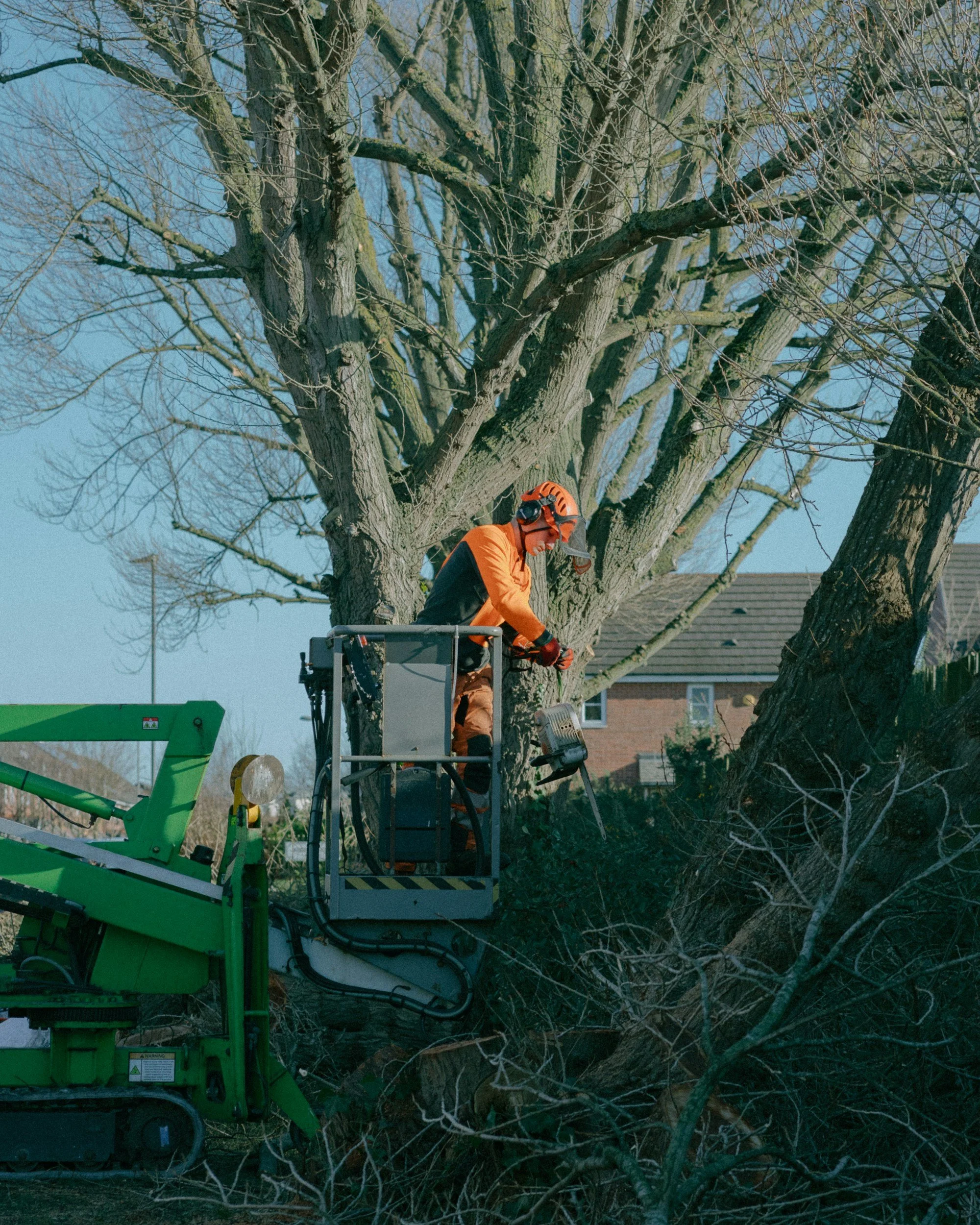
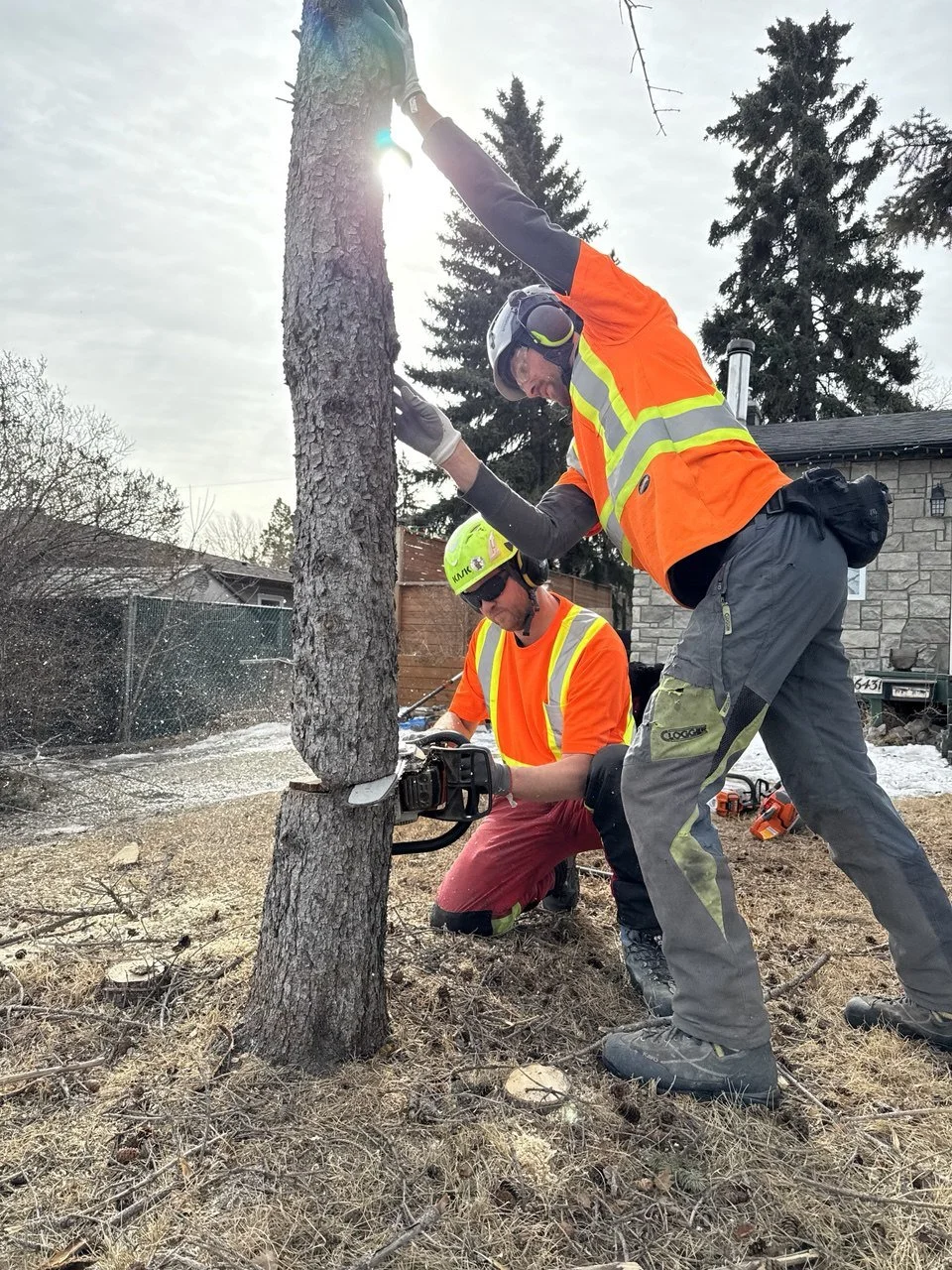
  • Confined Space & Structural Protection: Urban tree removals often occur in tight spaces – small backyards, between houses, near fences and gardens. Best practice is to take the tree down in controlled sections. Arborists climb or use aerial lifts to cut limbs and trunk pieces gradually, lowering them with ropes to avoid hitting structures. When access is limited (e.g. a tree in a fenced yard with no vehicle access), teams may bring in compact equipment or even a crane that can lift pieces out from over the house. Planning the drop zone is critical: crews clear obstacles and sometimes use plywood or tarps to protect lawns and windows from falling debris. By removing a tree piece by piece (top-down) and securing each cut section with rigging, the risk of property damage is minimized. This methodical approach is how large trees are dismantled next to homes, garages, or in other confined urban sites. It may take longer than felling a tree in one go, but it’s far safer in a city setting.

  • Stump Grinding & Underground Utilities: After a tree is removed, the stump is usually ground out below grade. Stump grinding is efficient, but hitting underground utilities (gas, water, cable lines) is a major concern. Thus, “Call Before You Dig” utility locates are always performed prior to stump grinding. It’s actually a legal requirement – arborists will contact local utility locate services to mark buried lines in the work area. Once everything is marked and it’s safe, the stump grinder chews the wood into chips. Crews wear protective gear as the machine can throw debris, and they establish a safety perimeter to keep people away during grinding. The resulting hole is backfilled with the wood chips or topsoil. By verifying locations of pipes and cables beforehand, tree services avoid costly and dangerous accidents when grinding or digging out stumps.

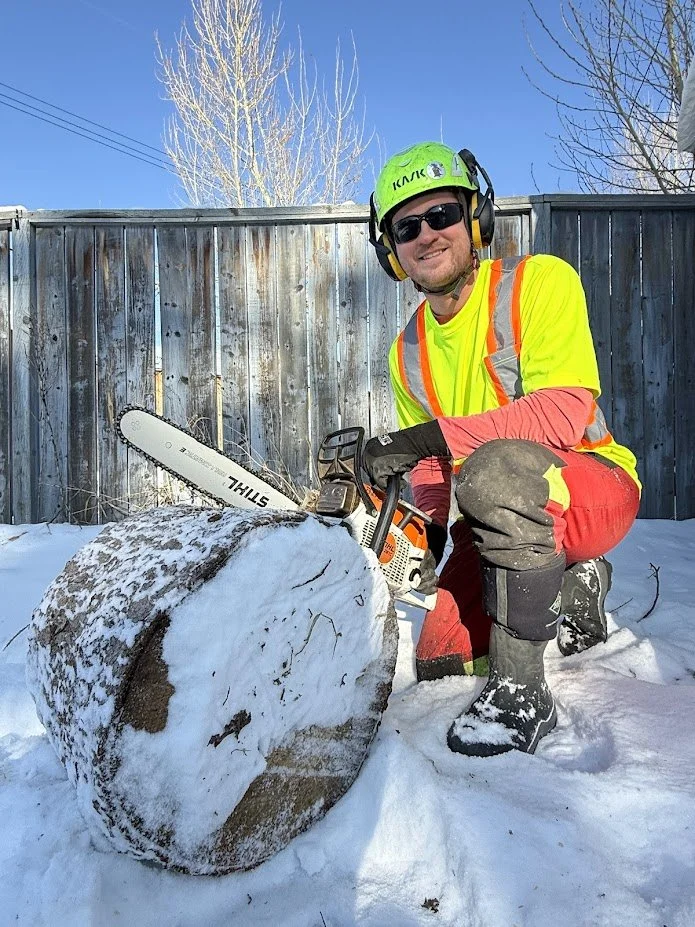
  • Personal Protective Equipment (PPE) and Training: Certified arborists and their ground crews adhere to strict safety training. They wear PPE including helmets, face shields or safety glasses, chainsaw-resistant chaps, high-visibility clothing, and gloves whenever cutting. Ropes, harnesses, and climbing gear are used and inspected regularly. One crew member is often assigned as a safety watcher when large limbs are being dropped. If a chainsaw is in use aloft, no one should be directly below the cutter. These work practices, along with first-aid training, ensure that tree removal is conducted as safely as possible in an urban environment where hazards (traffic, pedestrians, buildings) must also be managed.

  • Utility Disconnects and Permits: Besides power lines, professionals check for other services. If a removal is near overhead telecom lines or adjacent to a street, they may arrange temporary line drops or traffic control. They also ensure no hidden utilities like old septic tanks or irrigation lines will be impacted. In some municipalities, a permit or notice is required for removing very large trees or for blocking a roadway – reputable companies handle these logistical steps so the homeowner doesn’t have to. The overall goal is safety and compliance at every stage: from proper equipment use, to environmental safeguards, to obeying all city rules during removal.

By following these best practices, professional tree removal services maintain a stellar safety record even in tricky urban conditions. Always hire experienced, insured arborists who prioritize safety – they will protect not just themselves, but also your property and your peace of mind during the removal process.

Common Reasons for Tree Removal in Boreal Urban Areas

Tree removal is usually a last resort – arborists prefer to preserve trees when possible. However, there are many situations in Calgary and nearby regions where removal becomes necessary or unavoidable. The most common reasons for tree removal include:

  • Dead, Dying, or Diseased Trees: If a tree is largely dead (no live foliage) or has a severe disease/pest infestation, it poses a falling risk and can threaten other trees. For example, a spruce killed by bark beetles or a willow with advanced decay is essentially a standing hazard. Trees suffering extensive rot, fungal disease, or insect attack often cannot be saved. Removing them eliminates the danger of sudden collapse and can help stop the spread of pests or pathogens to neighboring trees.

  • Storm Damage: Many removals follow major storms. Gale-force winds, heavy snow, or lightning can cause irreparable damage – like cracked trunks, uprooting, or large broken limbs. If a tree’s structural integrity is compromised (e.g. a trunk split down the middle by high winds), the safest option is to take it down. Storm-weakened trees are unpredictable and may fail later without warning. Thus, after events like summer windstorms or wet snowfalls, arborists are busy removing or heavily reducing trees that aren’t stable anymore. Home insurance companies often require removal of storm-damaged trees that could fall on insured structures.

  • Overgrown or Dangerous Structure: A tree that has developed a hazardous structure may need removal. This category includes trees with big cracks in the trunk, severe lean toward a target, root plate lifting, or significant hollowing. Urban trees sometimes outgrow their space – giant poplars right next to house foundations, or spruce tangled in power lines. When a tree’s size or shape becomes incompatible with its location (and pruning can’t solve it), removal is warranted to eliminate ongoing risk. Large surface roots undermining foundations or infiltrating old sewer lines can also prompt removal if the tree is causing infrastructure damage. Essentially, any tree with a high likelihood of failure or causing property damage is a candidate for removal on safety grounds.

  • Construction and Landscaping Projects: Removing trees is sometimes necessary to make way for development or desired land use. Home additions, new garages, garden redesigns, or installing a pool often conflict with existing trees. In these cases, even healthy trees might be taken out because they are “in the way” of construction plans. City bylaws may require developers to replace or pay compensation for removed trees (especially public ones), but on private land it’s up to the owner. Professional removal ensures the tree comes down safely before heavy equipment comes in. Likewise, if a homeowner wants to plant different species or open up a view, they might remove certain trees for aesthetic reasons. Always check if any permit or replacement obligation applies when removing trees for development, particularly for large or protected species.

  • Invasive Pests or Diseases: As mentioned earlier, trees that contract certain aggressive pests/diseases often must be removed to protect the community’s other trees. A prime example is Dutch Elm Disease – if an elm in Regina or Calgary is confirmed positive, the city will issue a removal order and properly dispose of the wood. Similarly, if (or when) Emerald Ash Borer reaches the area, infected ash trees will die within a few years and will need removal (often proactively, before they become brittle). Other examples include trees with cottony ash psyllid (which decimated many black ash in Calgary a few years ago) or black knot fungus on Schubert chokecherries that is too advanced to prune out. Removing these problem trees can slow the spread of pests and allows space to replant with more resilient species.

In summary, urban tree removals in the boreal zone typically happen for safety (dead or unstable trees), damage mitigation (storm or root damage), or site development needs. Each case is evaluated individually. A qualified arborist will confirm if removal is truly needed or if an alternative (like pruning or cabling) could address the issue. When removals do occur, it’s often with the goal of replanting a suitable new tree in that location, keeping the urban forest healthy and sustainable even as older or problematic trees are taken out.

What Affects the Cost of Tree Removal?

Every tree is different. Pricing depends on:

  • Tree height and trunk diameter

  • Species and structural condition

  • Access (backyard gates, slopes, obstacles)

  • Proximity to buildings, fences, or power lines

  • Complexity of dismantling

  • Optional services (stump grinding, hauling, emergency work)

📸 Tip: Sending photos with your request often allows faster estimates.

  • “Tony’s pruning restored our maple’s natural shape - trees have never looked better!”

    Quote SourceMark T., Airdrie

  • “Efficient, professional, and thorough cleanup. Highly recommend Arborista.”

    Jane D., Calgary

  • "Cherry tree blossoms so well this spring! And my bushes are cleaned up. Thanks for service Tony"

    Irina T., Calgary

Frequently Asked Questions

  • Not for most private yard trees. City trees require permission.

  • Often yes, but wildlife nesting and elm regulations can affect timing.

  • Yes. These removals require specialized planning and should only be done by professionals.

  • Absolutely — we can cut and stack it if requested.

  • Absolutely. After pruning, we haul away all branches and wood chips, then do a final sweep of your yard. If you’d like to keep the wood for firewood, just let us know - we can stack it for you.

  • Stump grinding is optional and can be added to your service.

  • Small trees may take a few hours; complex removals can take a full day.

  • Most small-to-medium residential trees take 1–3 hours each. Larger or multiple trees may require additional time. We’ll give you an accurate timeline as part of your free estimate.